Working in the grove
The harvest lasts a season. Caring for olive trees lasts all year. Every decision starts with observing the trees, soil and weather. These are the practices that shape our work.
01 · The roots
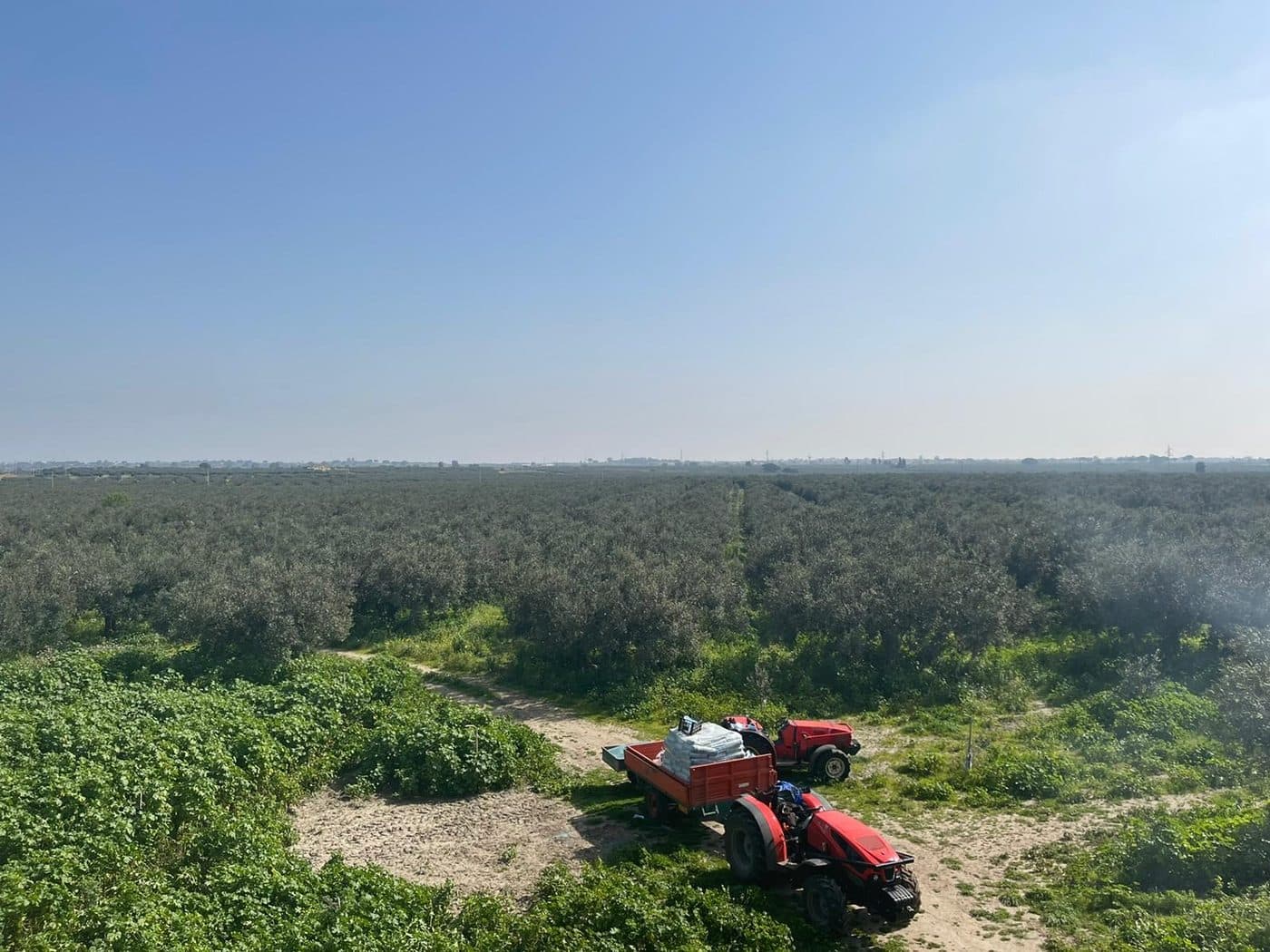
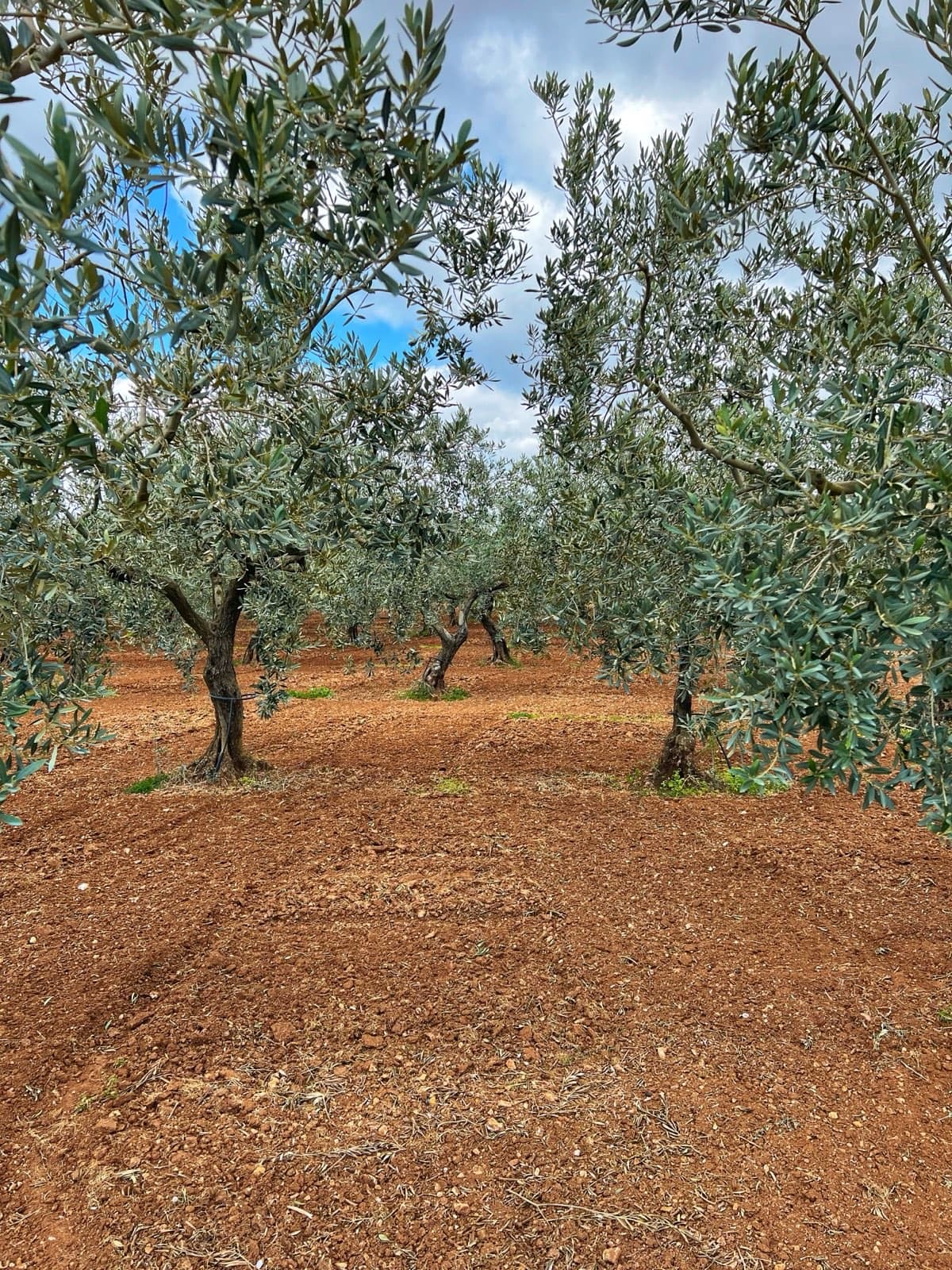
A good harvest begins with living soil. We shred pruning residues to return organic matter to the ground and use mechanical cultivation to manage weeds.
Organic fertilisation and attention to soil structure help nourish the trees. Cultivation also calls for restraint: too much can damage roots and deplete the soil.
Nourishing the soil, respecting its balance
02 · Light and space
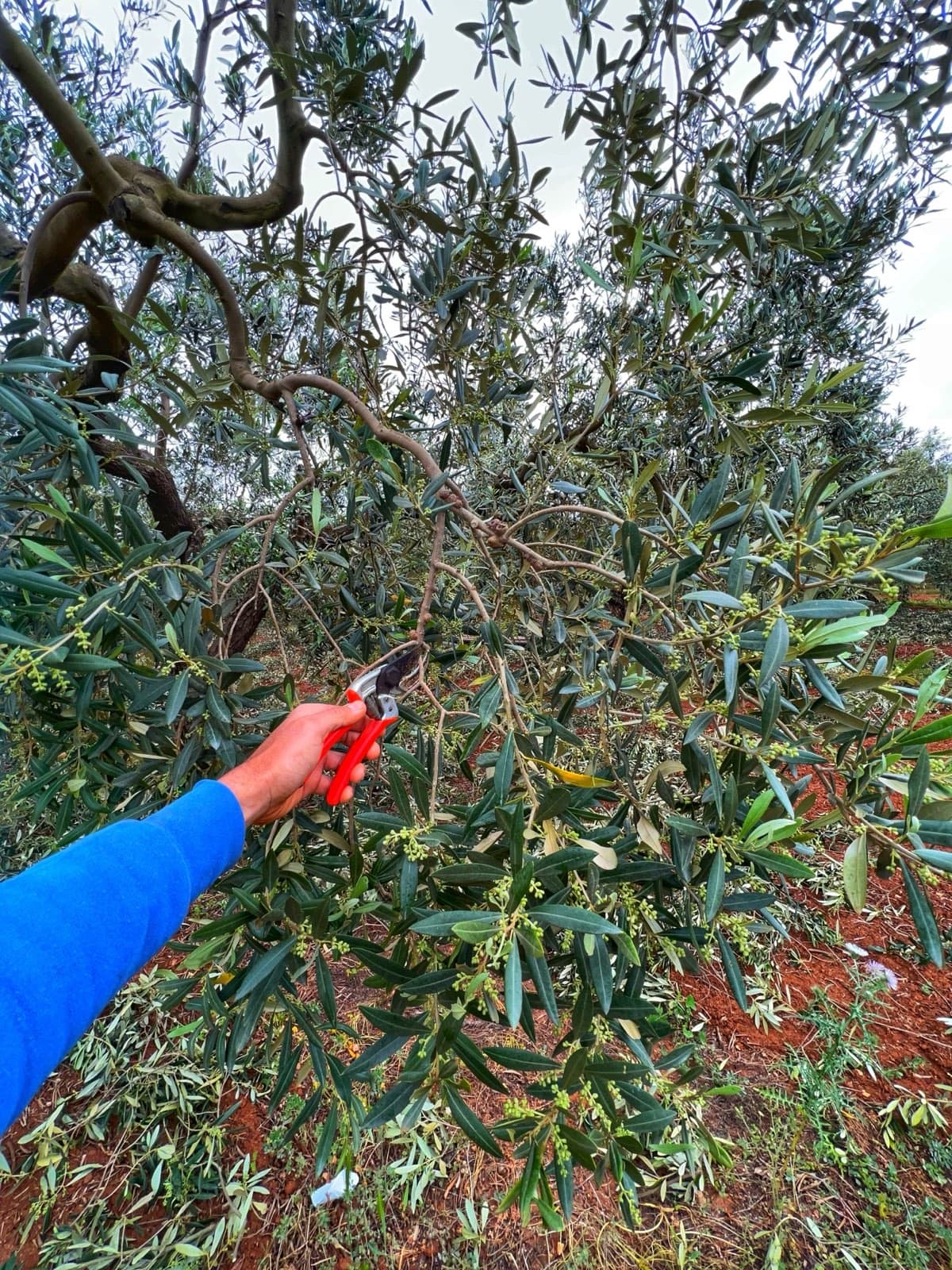
We personally oversee pruning. Opening the canopy to light, removing damaged branches and balancing growth with production are decisions made tree by tree.
Most pruning takes place after harvest, during dormancy and before flowering. In summer we also remove suckers, the shoots growing at the base that draw resources away from other branches.
Every tree needs its own approach
03 · Observe before acting
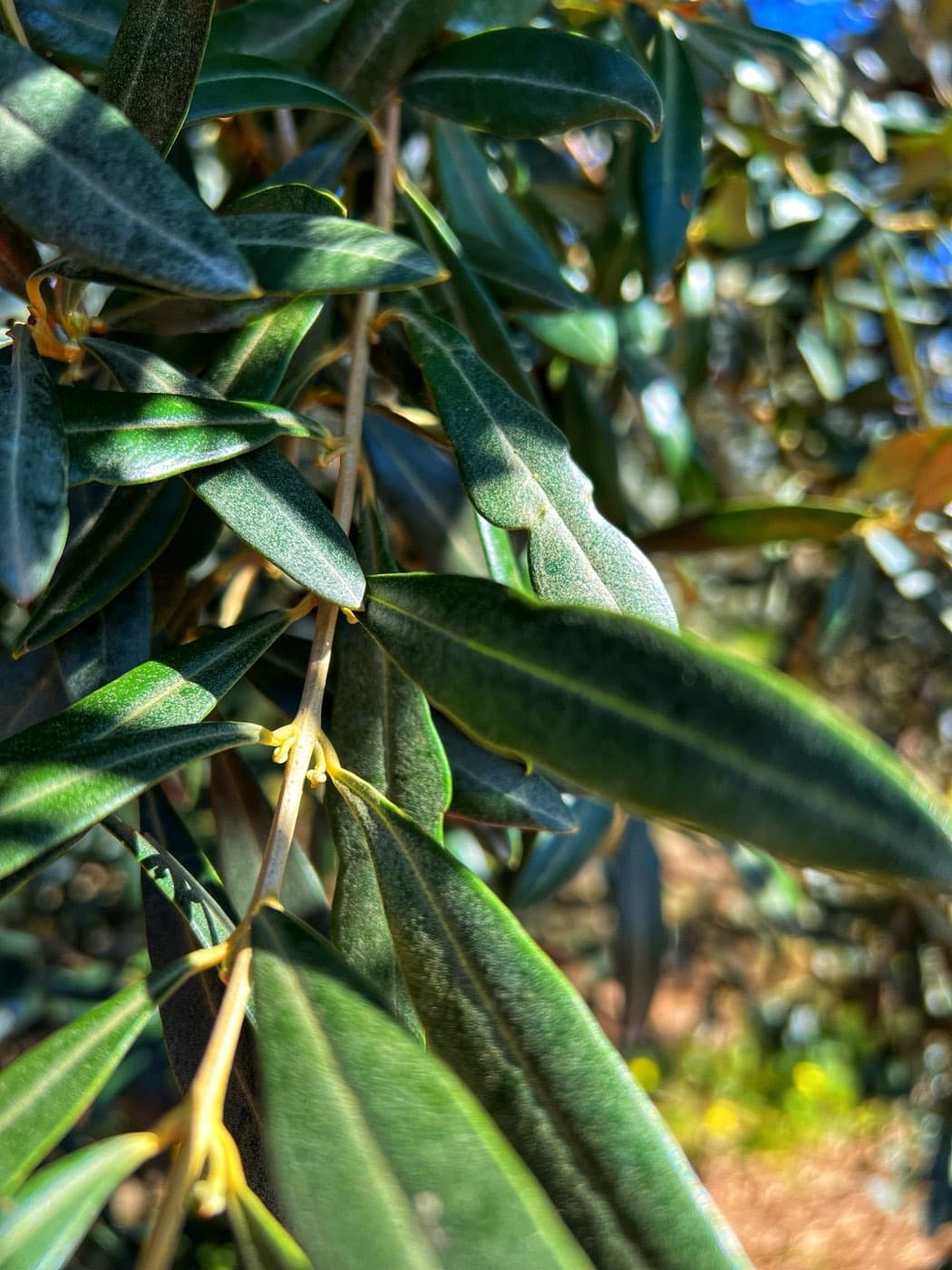
Protecting olive trees begins with recognising signs: the condition of leaves, the health of the fruit and the presence of insects. The olive fruit fly is one of the organisms that needs particular attention.
Monitoring and traps help us identify a real risk. This observation is part of organic cultivation and allows interventions to be assessed according to conditions in the grove.
Checks in the grove throughout the season
04 · Water
Olive trees withstand drought, but hotter periods need attention. Wind, rainfall and soil characteristics change their water needs from one season to the next.
Our irrigation systems distribute water near the trees. Frequency and quantity follow the conditions in the grove: irrigation supports the fruit and the tree while using a precious resource carefully.
The needs of the tree, not a fixed timetable
05 · The moment we wait for
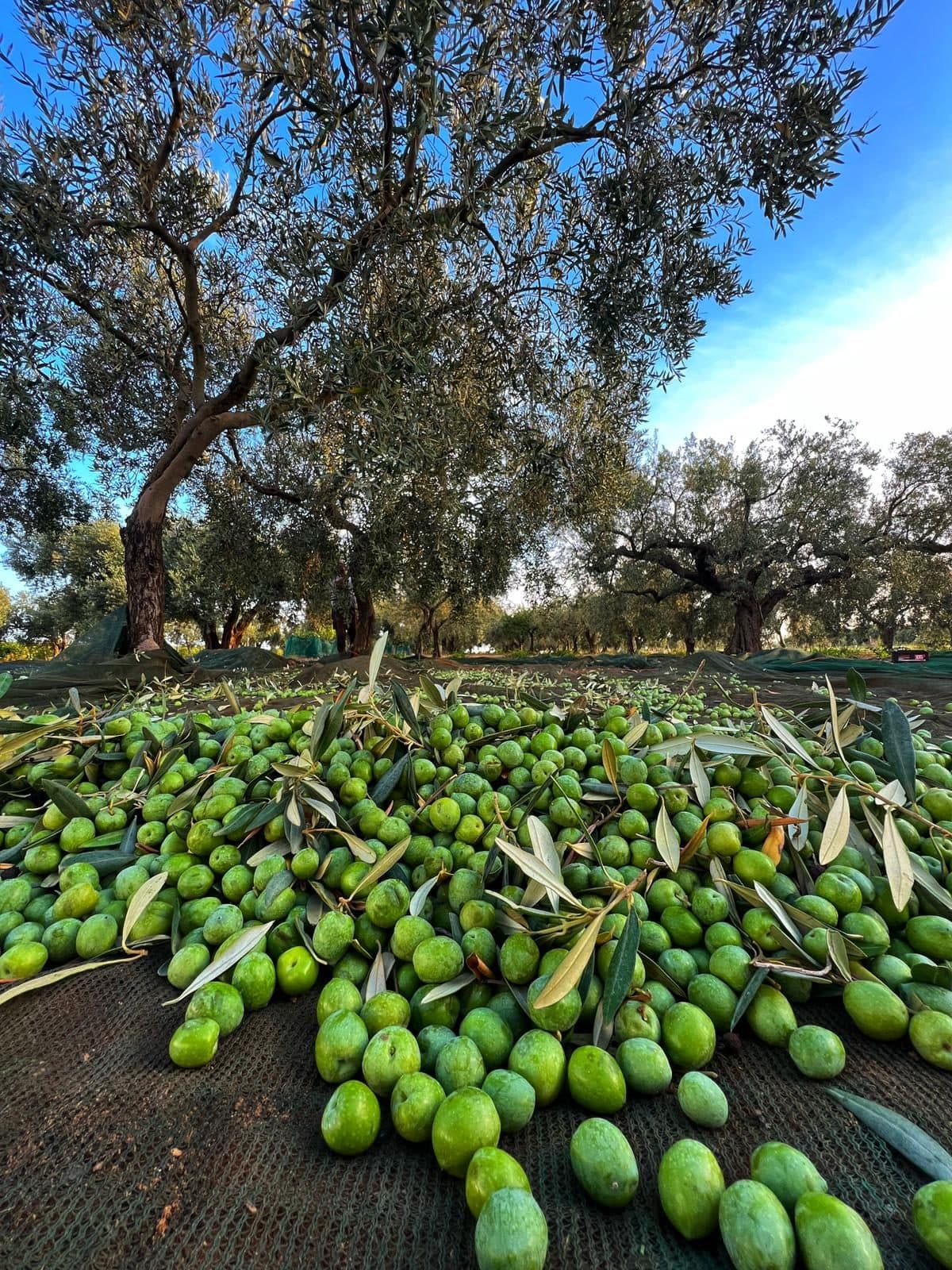
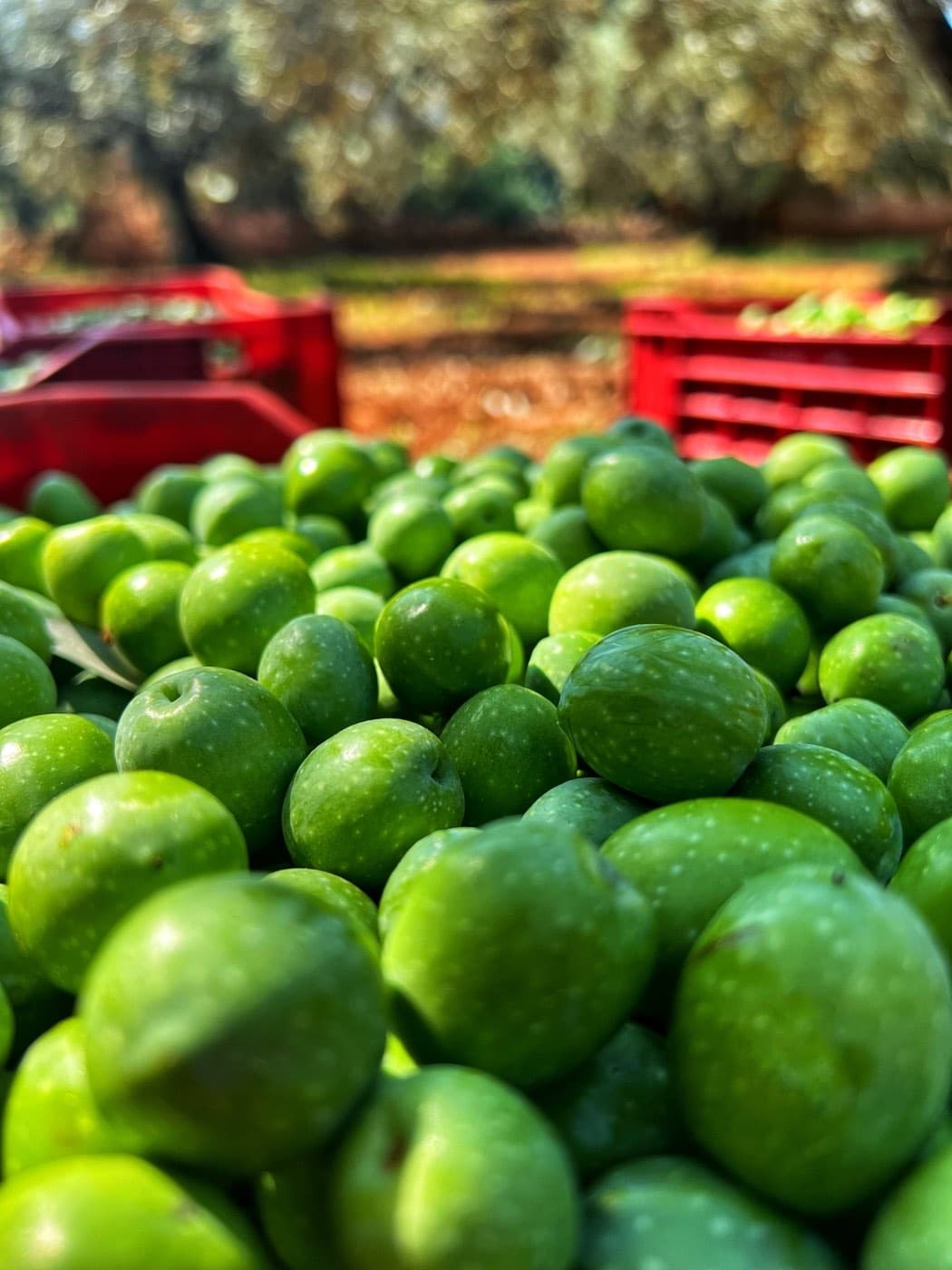
For our oil, we harvest in autumn, generally between October and November. The precise date depends on the season and ripeness: waiting for the ripest fruit does not necessarily produce the best oil.
We use manual methods and mechanical tools, laying nets beneath the trees. The olives are moved into bins and taken to the mill for processing within 6 hours, keeping the wait short to preserve the harvest’s quality.
From grove to mill, without unnecessary delays